Article
Background
During her Amsterdam Fellowship in 2024, Magdalena Schulz became increasingly aware of how digital spaces shape the way we see—and divide—the world. After noticing how homogenous her own “for you” page had become, she began digging deeper into the psychological mechanisms behind polarization and the role social media plays in reinforcing in-group and out-group boundaries.
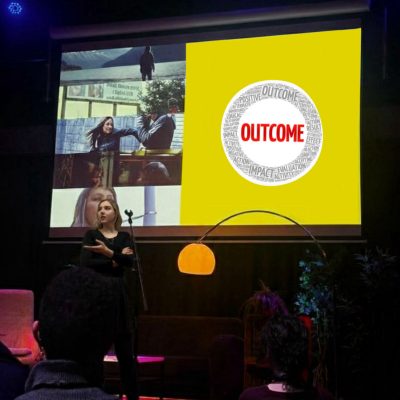
Living in Groningen, she also witnessed how young people expressed anxiety around political conversations, often avoiding them altogether for fear of conflict. This realization inspired her Action Project “From Conflict to Conversation: Navigating Polarization with Empathy”. She created an interactive workshop designed to help people recognize bias, understand the dynamics of division, and practice constructive dialogue.
Participants uncovered biases, explored different perspectives but also shared values, and practiced active listening, mindful self-regulation, open communication.
Approach and Methodology
Magdalena designed a workshop combining multimedia, education, and hands-on practice. Participants first watched The Social Dilemma to reflect on how digital environments amplify division. She followed with a short lecture on in-group and out-group psychology, highlighting the mechanisms that drive stereotyping and mistrust.
The heart of the workshop centered on empathy-building activities: guided dialogue, perspective-taking, mindful self-regulation, and active listening exercises. These practices helped participants clarify disagreements, identify shared values, and gain confidence engaging with people holding different views.
Impact
The workshop directly involved 33 participants, primarily students and young professionals in Groningen, with an estimated 66 indirect beneficiaries through shared conversations in their personal networks.
Qualitatively, participants reported greater awareness of polarization, improved listening skills, and a stronger sense of confidence when entering difficult conversations. Many expressed that they left with practical tools to recognize biases, both in themselves and in digital spaces. Furthermore, they felt they could now approach discussions across differences with more openness and curiosity.
A particularly touching moment came when a student shared that they usually avoid political conversations altogether. During the structured dialogue, they opened up about navigating opposing opinions in their family, only to be met with genuine care and respect from others in the room. Watching their shift from nervousness to confidence captured the heart of Magdalena’s project.